Wednesday, November 2, 2016

Photowalk: 31 October 2016

Photowalk: 31 October 2016

Photowalk: 31 October 2016

To open my blog post is a great image of red yucca.

Red Yucca

Was standing around for my meeting and noticed this empty lot. Yet is full. These images are not much yet I think the subjects captured are quite beautiful. Just little things I see when having the blessing of getting out of the house. The world around me.

Urban Architecture

Had a meeting the morning of the 31st. It offered me the opportunity to grab some images while in a strange neighborhood. Thought I would share some of the best. For the first set, some landscaping stones that I thought were very beautiful. I love the textures.

Cracked Stone

Cracked Stone with Copper Ore?

Would have been nice if I had used my water misting bottle to enhance the color of these stones. Maybe bring out the golden color of the iron pyrite crystal facets?

Iron Pyrite In Stone


Just so you can see, I imaged many beautiful plants as well. Captured images of some magnificent plants on this walk, too. Must have caught the landscaping right before it was to be pruned. The gardens were lush, well-kept, and at peak beauty. Below is a red yucca stalk of inflorescence. Absolutely magnificent.

More Red Yucca

No photowalk is complete without an image or two of the oleander. Deadly poison this is... "Dog's Bane."
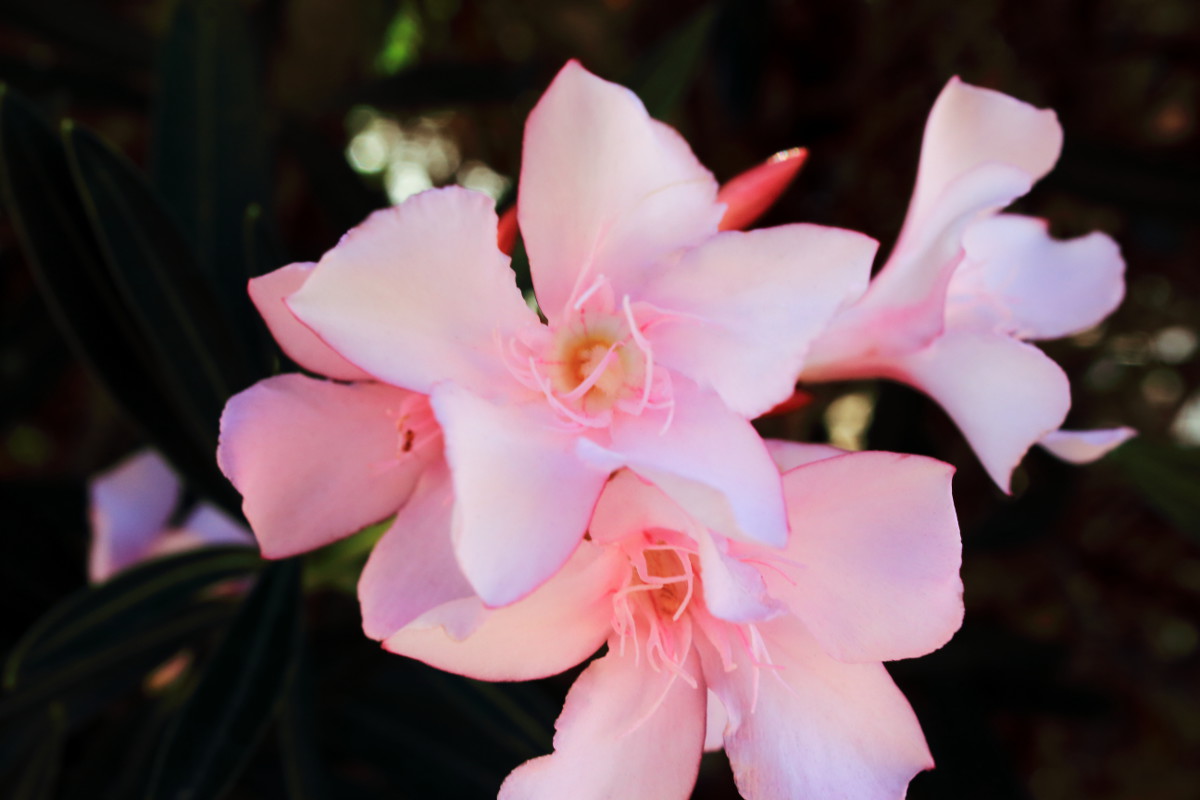
Dog's Bane and Ant

Going through these many images, I realized how many images were captured. Have more oleander to share. As well as others.The oleander shrubs had seed pods because the Landscaping crews had not been butchering the gardens to ease the workload.

Am working on these photos... have discovered DUST. Found a nice flare in this Ponderosa Pine image. Western Yellow Pine. Is a six-sided hex... a true flare.

Lots of these pine trees lined Flamingo on my walk. They are thirsting, yet we are self-compliant in most cases with water restrictions. The foliage could be much thicker on these trees. The Ponderosa Pines at the park directly across from my apartment are thick because plenty of water is used to water the lawn for the kids to run and play. Do kid's stuff and exercise... and this benefits the trees.

But I got up close and found an insect that is known to be hard on trees. Halyomorpha halys. This is obviously a contributor to the sparseness of the tree's foliage. The pine "cone" is actually quite edible.

Alongside the lush landscapes accompanying this photowalk were the un-butchered Chinese Fan Palm Trees. One on our many indoor gun ranges has been moved to a more profitable location, and the business front has not been maintained for lack of a new proprietor. I was astonished to see how the seed branches actually "are" if allowed to mature... (and on a side note) I honestly believe landscape companies butcher their locations to make professional upkeep more of a mass production assembly line process. Less work and care for the same basic rate. This is understandable. Making a profit at the expense of actually utilizing a skill at a master's level is the way Americans have been doing things quite a number of years. Doing things the way it is done inside other countries at the loss of our craftsmanship. Enough of that! The images of these palm trees that have had zero maintenance speak for themselves.

Beautiful Fan Palm Trees

It would be nice if there were enough time in each day for me to be able to harvest these edible fruits. Yummo!

Examples Of Palm Fruit

Time is becoming a factor because of positive choices. Am committed to constructing this blog today, and I have plants to take pictures of tomorrow and gardening tomorrow that will use that day, and so on. Great!! Am starting to wonder if palm fruit pie would taste good, yet there are more important tasks at hand. Yikes. Responsibility.

It seems to me that there is quite a bit of ripe fruit. There were two trees. Here are some Mexican Bird Of Paradise. They are shrubs with unique and beautiful flowers which are often included in Vegas landscapes.

There were quite a few different shrubs that were allowed to grow to monumental proportions. These Barbados Fence Plants/Bird of Paradise were one of them. The image below, my perspective is straight up. This shrub must have been twenty feet high.

Grabbed some of those seed pods while I was at it. There is a big area along the side yard fence that needs thorny shrubs to keep out kids. This area will be my project this spring and summer. Will plant some of the seeds I gathered while out on this photo walk. Have some seed from this type of plant also.

"Yellow" Mexican Bird Of Paradise

And a nice detail of the above image.

Tuesday, November 1, 2016

My Ant Colony

My Ant Colony

My Ant Colony

Have been interested in this ant colony for a while. Had quite a few images that I have sorted and I looked up red ants.

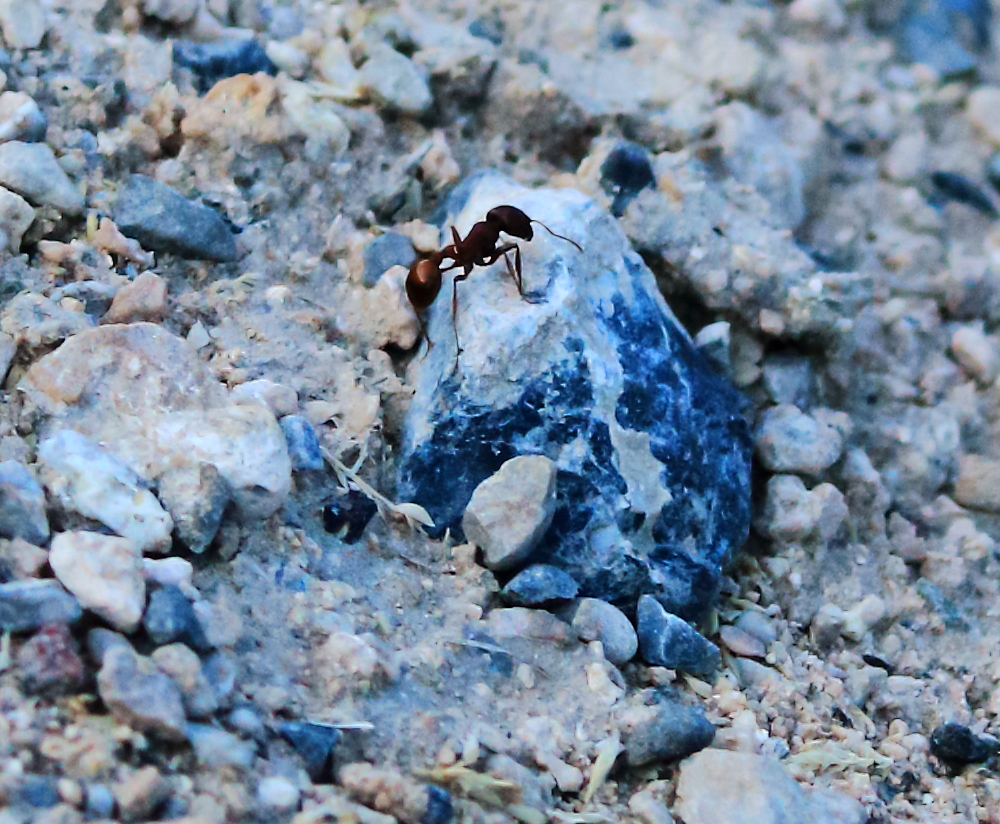
The image of the lady up above is the best image of a "single" worker that I could find. When researching, discovered a lot about the red "fire" ants plaguing farmers and avid ant hunters (kids). Looked deeper and discovered Red Harvester Ants at Wikipedia. This information defined my colony with a bit more accuracy. The "binomial name" or scientific name of these ants is Pogonomyrmex barbatus.

Ant Colony: May 2016

Ant Colony: October 2016

The above images show how the colony has grown over the 5-6 months I have been watching and investigating it.As of October the colony is about 3.5 feet wide and 4 feet elongated. The length follows the obvious trail over to my garden area in back. Below is a detail of the entrance at the hub of the colony mound during May 2016.

A trail that has cut a groove into the mound is clearly visible inside the October 2016 image. This is one of the traits harvester ants exhibit. Two to three trails or spoke leading from the central entrance hub. The October 2016 image also displays this hub and spoke type design by the ants.

Also, noted inside the Wikipedia article was that seed husks and debris was "scattered" around the ant nest. I submit that even the litter is organised and purposely sorted as shown in the following imnages. The first below shows the seed husks in the upper/middle left of the colony

The image below is my best detail shot capturing the seed husks.

Below, the first in a series of photos. This image was captured around 3:09 P.M. in the afternoon.

Before Mouse

I found this rodent over in my side yard already a piece of fresh meat. It was still warm, I think. Did not touch it with unprotected skin and washed my hands and tools with disinfectant after moving this disease ridden rodent to the ant colony.

After Mouse: 4:43 P.M.


I took photos while it was daylight. The Wikipedia article did not mention harvester ants eating meat. Am assuming that they were just going to move this mouse.

When I checked in the morning the mouse was no where to be found. Spent about half-an-hour searching around the nest and it wasn't there. Am still assuming the ants moved the mouse, one of my neighbors cats may have decided to play with it, or the ants dismembered the mouse and moved it.Even followed the trail (below) to see if it was along its route. When the grasses are not trampled down by my exploring the trail goes about 15 feet from the nest and splits into a 'Y' to the left and right. This is quite obvious yet difficult to capture inside an image.

Neither was the mouse over where they are storing their seed husks. UPDATE 4nov16: Was outside showing my neighbor the ant colony along with showing him this blog post. Someone has stepped onto the mound. The kids are always climbing my wall. Anyway the ants are quite stirred up with activity tonight and I captured some quick images I will post tomorrow. I am interested in finding out if the ants repair the symmetry of the slopes. There must be a good 250 - 300 ants on top of the mound. Am not sure if there is nocturnal activity at night. Guess I will find out because it is past evening twilight as this is texted.

Had planned on posting some images of the repairs involved with a single footprint into the nest mound. But, apparently there was a grass fire on my side yard while I was gone. Below is the damage, both caused by the fire and the efforts to extinguish the fire.


Am going to watch the reconstruction to maybe learn something.

Saturday, October 29, 2016

Hacking Health - Quick Sandwiches II

Hacking Health - Quick Sandwiches

Hacking Health - Quick Sandwiches

UPDATE:10 January 2017. I have discovered that literally there is not enough time to prepare food. Have started to develop a website about Donald Trump, and have been at the xhtml for 4 hours and have barely begun to scratch the surface. Had to get something in my stomach and was thankful to have a can of some nice beef stew. Sheesh If I had to stop my thought process there would be an extra-ordinary loss of time getting my thoughts back in order.

What happens? I am in the middle of texting this code into blogger and my mind is really focused. Yet I have to eat. The problem is when preparing a "long" meal, I step away and get back onto the computer losing track of time and the cooking food. So, quick, healthy sandwiches is one alternative I have chosen.There are things that are necessary to keep on hand in one's refridgerator so that sandwich making is not a huge project.

    Sandwich Necessities
  • Breads
  • Spreads and condiments
  • Fillers and meats
  • vegetables

Probably the original quick sandwich

PB&J

Egg, Spam, and Cheese

A healthy change up

PB&B

Once a week boil up a dozen or so eggs. Fry up some fresh meet.

Egg, Meat, and Cheese Sandwiches

It is wise to have a few containers of tuna stored in the kitchen. For a quick sandwich

Tuna Spread

Below? An example of the importance of preparing a decent shopping list.

Tuna Spread Sandwich Dinner

This is a serious sandwich discussion. Another example

Tuna Spread Sandwich Meal

And yet another

Tuna does not deserve all of the glory

Fruit and Vegetable Sandwich

Bird instead of fish?

Chicken of course

Cannot seem to stay away from one of my favorites.Have noticed I am partial to strawberry jam.

PB&J

Tonight, Wednesday, 21 December 2016, I am frying up some Spam as I develop this page further. Am frying up enough meat for at least three sandwiches, and I have some cheese and veggies in the fridge. Then, when I am hungry, can just slap a couple of sandwiches together with some veggies on the side, and have dinner without interrupting my fun on the computer.

Sunday, October 23, 2016

My Shamrocks

My Shamrocks

My Shamrocks Autumn 2016

I have had Oxalidaceae Oxalis debilis included as an integral part of my garden the whole time. Forever. Got the original bulbs (tubers?) from good ole Mom. Actually, I am not sure if what Mom gave me fit the botanical definition of tubers... more like a handful of muddy plant material dripping water all over my clean pants. Below is an image of Mom during her final Christ's Mass season with her family.

Here in Nevada U.S.A. the plants hibernate during the summer if left to thrive on their own account. Just keep the tubers moist enough so they do not dehydrate; not moist enough so they rot and mildew. Mostly, I have had my specimens in containers, but sometimes I have grown them directly in the soil. From my own experience these are a tough, hardy, and enduring perennial, and true to that definition. The Wikipedia page offers a lot of important scientific information. This year I am glad to have remembered to photographically document proof of this seasonal hibernation that occurs in the Eastern Mojave Valley. The photographs following document the recovery from hibernation. The images themselves are dated and time stamped.This first image below captures the plant as it appeared on 22 October2016.

While the image below captures the same plant on 13 September 2016 a little over one month earlier. At the end of the very harsh Mojave Summer Season

This third image illustrates the recovery process best in light of the other two photos.The image was captured on the 30th of September.

As I put together this post, the feeling inside is so pleasing to me. I have intended to put together this article for years, only all of the factors never lined up. The above images are all of the same potted plant, in the same location and position, with the timing sequence in just the right order.The strands of old growth hanging over the side dead are last year's growth which is usually added to my mulch area. Like I posted earlier, everything just fit together like a puzzle this year. Another thing that I am relearned while researching for this post? That this plant is quite edible. There is a downside though. The article I read stated that the chemicals inside Oxalis deplete calcium.

Captured: St. Patrick's Day2016

Shamrocks also exhibit a property known as nyctinasty. The Wiki link explains it quite well... as do I hope my images.

Below is an image of one of my shamrock containers on October 28th at 0920 hrs. All of the plants are in full bloom here in Las Vegas, Nevada, USA.The blooms are fully open to capture the day's sunlight

This year I remembered to capture images of the plants as time opened and closed the blooms.This next image below shows the plant in partial nyctinasty. Captured on the 23rd of October at 1645 hours.

Partial Nyctinasty

What happens each year is I move, prune, or transplant the shamrocks before capturing the nyctinasty process. Below is an image of the "same" shamrock closed and in full nyctinasty.This last image was captured on the 24th of October at 1630hrs.

Fully closed

Please note the condition of the pot. I have three that are all pretty beat up from sun baking and age. A shout out to any rich scavengers and/or other acquaintances that could assist me (the financially challenged crippled old guy) because I really need a new planter for my shamrocks. Mom gave them to me. And am just plain flat @55 broke most of the time. Surely would appreciate it. In addition, I am proud to be a Mick, pure, all the way back to the boat. On Dad's side before the boat, one of my grannies was a Welch woman. Gael just the same.

Another unique property of these edible plants is the swirled unopened bud. I zoomed-in and cut out a detail to show you folks with closed blooms in the same image.

Rounded up this image from February of last year to show how full and beautiful these potted plants can get. Not many blooms yet this is during high Winter.

The image below was captured during January 2017 at Las Vegas, NV, U.S.A.The temperature is getting down to 35°F through 40°F during the night and 60°F up toward 66°F during the day. The plants are flourishing. The foliage is so very dark green it could almost appear to be tinted a purple color.

Saint Patrick's Day is coming up on March 17th and I must keep this in mind.